What Construction Site Signs Are Needed at a Building Site?
A building site can change from one day to the next. Work areas move, new hazards appear and different people arrive on site, so clear signs help communicate what is happening and where people should go. The right set depends on the work, the site layout and the risks present; one standard bundle will not suit every project. Start by identifying the information workers, visitors and passers-by need at each location. Then choose signs that make those messages easy to recognise, place them where they can be seen and review them as the site changes.
Start with the site entrance
The entrance is a useful place to give people essential information before they enter the working area. Consider whether visitors need directions, a warning about site access or a reminder of required protective equipment. The supplied construction-sign page lists site entrance, keep-out and hard-hat signs among its examples.
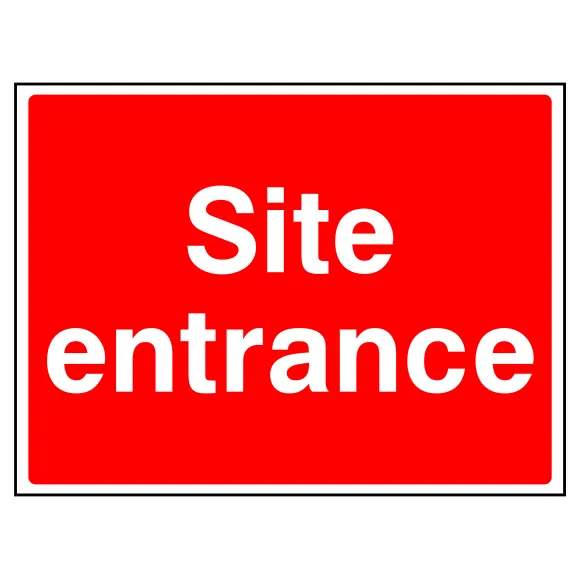
Walk the boundary and approach routes as if you were visiting for the first time. Check that signs are visible before someone reaches a restricted area, vehicle route or other point where they need to make a decision. If hoarding or temporary barriers are used, check that they do not hide the message.
Signs should reflect the site’s actual arrangements. Confirm entry instructions and protective equipment requirements with the person responsible for site safety before ordering or installing them.
Match sign types to the message
The supplied safety-sign page groups signs into four common visual categories:
- Warning signs use a yellow triangle to draw attention to a possible hazard.
- Mandatory signs use a blue circle to show an action that must be followed.
- Prohibition signs use a red circle and crossbar to show an action that is not allowed.
- Safe-condition signs use green to identify information such as first aid or emergency exits.
These categories help people recognise the broad purpose of a sign quickly. Choose the message to fit the situation: a warning should identify the hazard, while an instruction should say what action is expected. Avoid using a general sign where a more specific message would make the risk or instruction clearer.
Identify hazards and restricted areas
Review the work areas and consider what a person needs to know before approaching each one. The product pages give examples including electrical hazards, demolition, hazardous areas, excavations, moving machinery, falling objects and restricted zones. A sign for one hazard should not be assumed to cover another; select messages that match the risks identified for the particular site.
Use site safety signs at relevant entrances, work zones and access points so people encounter the information where it applies. The supplied safety-sign page also lists prohibition, warning and mandatory signs for workplaces and construction areas. Keep messages concise, and make sure the symbol and wording support one another.
Do not rely on a sign as a substitute for managing a hazard. It is one way to communicate information to people on site; decisions about controls and instructions should come from the project’s safety planning and responsible personnel.
Plan routes for people and vehicles
Where vehicles, deliveries and pedestrians share space, consider what directions people need at junctions, entrances and crossing points. The construction-sign page includes a traffic-management sign set, while the safety-sign page identifies moving machinery and restricted zones as examples of site hazards.
Map the routes and mark points where a clear instruction could prevent confusion. Place signs so they can be noticed before a person reaches a turning or crossing. Check that temporary changes to the site layout do not make the directions misleading.
A sign can only help if the intended audience can see and understand it. Consider sightlines, lighting, obstructions and the approach direction. Recheck the position after barriers, storage areas or equipment are moved.
Choose signs for each area
A site-wide review can help create a practical list before ordering. For example, the entrance may need access information, while a work zone may need a hazard warning or an instruction about protective equipment. A first-aid point or exit route may need clear identification. These are examples to assess against the project rather than a universal checklist.
The construction-sign page lists individual signs and sets, including site safety, hard hats, keep out, hazardous area and demolition in progress. It also describes custom options for site-specific hazards and instructions. The right selection depends on what the site team has identified and where each sign will be used.
A clear list of construction site signs can help keep messages consistent across entrances, work zones and shared routes. Record the sign location and purpose so it is easier to spot when one becomes hidden, damaged or out of date.
Check size, material and finish
The product pages list options such as Foamex, Correx and Dibond, as well as standard and large-format sizes. The safety-sign page describes 3 mm signs and lists matt, gloss, dry-wipe and anti-graffiti finishing options. Check the specific product details and ask the supplier which material and finish suit the location and expected conditions.
Consider how far away people will read the sign and whether it will be fixed to a wall, fence or hoarding. A sign placed outdoors may face different conditions from one inside a site office. If the sign needs to be visible in low light or from a greater distance, confirm the appropriate format and placement with the supplier or site team.
Review the artwork before production. Check spelling, symbols, instructions and any site-specific details. If signs are ordered as a set, confirm that the messages and visual style are consistent.
Keep the information current
Construction work changes, and signs can become inaccurate when routes or work areas move. Include signage in regular site checks: confirm it remains visible, legible, relevant and securely fixed. Remove or update messages when the conditions they describe no longer apply.
For further context, read why clear signs matter on construction sites. The supplied Medium page could not be accessed during research, so the link is included as a contextual reference based on its title.
Conclusion
The signs needed at a building site depend on the hazards, access arrangements and routes identified for that project. Begin at the entrance, then review work areas, restricted zones, vehicle routes and places where people need directions or emergency information. Select messages that are specific, position them where they can be seen in time and check them as the site changes. The supplied product pages show examples of sign types and formats; confirm the final selection with the people responsible for the project’s safety arrangements and the sign supplier.


Comments
Post a Comment