How to Protect Printed Foamex Panels from Scratches During Setup
Printed boards can travel through several hands before they are in place: packing, transport, unloading and installation all create opportunities for scuffs. At an exhibition, even a small mark may be noticeable on a large, clean graphic. A little preparation can help protect the print and edges while keeping setup straightforward. Check how the panels are packed, plan where they will be handled and decide how they will be mounted before the event day. The following steps draw on the supplied product information and practical setup considerations for temporary displays.
Prepare the stand before unpacking
Set up the shell scheme or display framework first. Clear the floor and nearby surfaces of tools, packaging and other items that could rub against a panel. Check the wall layout, required fixing method and panel order against the stand plan.

This matters because the supplied product pages describe rigid boards intended to fit specific shell scheme arrangements. Some layouts use infill panels between frame sections; others create a more continuous finish. Confirm the stand measurements and panel sequence before taking the graphics out of their packaging.
Keep the panels protected until the installation area is ready. If several panels are being fitted, label or arrange them in the order they will be installed. This reduces unnecessary handling and makes it easier to identify the correct panel without repeatedly turning the prints over.
Handle the printed face with care
Lift each panel by its edges and use both hands where the size calls for it. Avoid sliding a printed surface across a table, floor or another board. Keep hard or sharp objects away from the graphic, and do not place tools on top of it during setup.
The exhibition display page describes UV-cured graphics as scratch-resistant and fade-resistant. It also lists anti-scratch lamination as an available option for some panels. These features can help with handling, but they do not make a print immune to damage. Ask the supplier which finish was selected and follow any handling guidance provided for that product.
When carrying several panels, keep them separated with suitable protective material if the supplied packaging does not already do this. Avoid placing weight on a stack or leaning boards where they could slide. Exhibition panels can be large, so plan the route from the delivery point to the stand before moving them.
Check the mounting method first
The supplied product information describes heavy-duty Velcro or simple fixings for attaching some boards to shell scheme frames. It also notes that certain layouts use different panel arrangements and dimensions. Check the organiser’s stand specification and the printer’s instructions to confirm the right fit and mounting method.
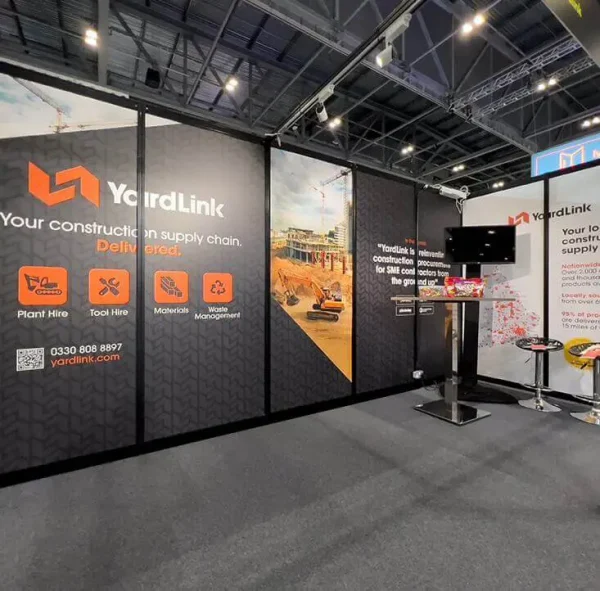
Prepare the fixing points before bringing a panel into position. If Velcro is being used, make sure the intended surface is ready and the placement has been measured. Avoid repeatedly lifting and repositioning a panel, as each adjustment means more handling and may put strain on its edges.
For larger displays, work with another person so one person can guide alignment while the other supports the panel. Keep the board upright and supported until it is secured. Do not force a panel into a frame or fixing that does not fit; pause and check the measurements instead.
Choose a finish for the event environment
The exhibition display page lists matt, gloss and anti-scratch lamination options. The shell scheme page also lists matt and gloss finishes and mentions anti-scratch as an available option. A matt surface may help reduce glare under overhead lighting; gloss gives a brighter appearance. Confirm the options available for the exact material and product being ordered.
The site describes Foamex as a rigid display material and also lists rollable PVC panels for some shell scheme graphics. These formats are handled differently, so make sure the instructions match what you have ordered. Foamex panels should be stored flat between events, according to the supplied shell scheme page. Follow the supplier’s storage directions to help prevent damage while the boards are not in use.
Protect edges and corners during movement
Scratches are not the only marks that can affect a display. Corners and edges may be vulnerable when a panel is moved through a narrow doorway or placed on the floor. Keep panels away from busy walkways and avoid resting them against unstable objects.
Before installation, inspect each board in good light. Check the face, corners and printed edges while it is still easy to reach the supplier or resolve a delivery issue. If a mark is present, take a clear photograph and contact the supplier before attempting a repair or covering it.
If your event uses several exhibition panels, keep them in sequence and move only the next one needed to the installation area. That limits repeated handling and makes it less likely that boards will be mixed up or placed face down on an unsuitable surface.
Pack for transport and reuse
After the event, remove fixings carefully and support the panel as it comes away from the stand. Do not pull sharply on a corner or drag the board across the frame. Clean only as directed by the supplier, since the suitable method may depend on the print and finish.
Store Foamex panels flat in protective packaging between events, as the supplied product information recommends. Keep them somewhere they will not be knocked, bent or have heavy objects placed on them. If you are using rollable graphics, check the supplier’s guidance for transport and storage rather than treating them like rigid boards.
For broader display planning, see ideas for building an effective event display. The supplied Medium page could not be accessed during research, so the bold link uses a related anchor based on its title.
Conclusion
Protecting a printed display starts before it is unpacked. Prepare the stand, clear the handling area, move boards by their edges and confirm the fixing method before lifting them into place. Check the finish and inspect each panel before and after the event, then store it as the supplier recommends. The supplied product pages describe rigid and rollable options, several finishes and shell scheme configurations. Foamex Printing Company can confirm which handling and storage guidance applies to the specific panels you order.


Comments
Post a Comment